
- Home
Properties and applications of titanium plate and titanium alloy plate
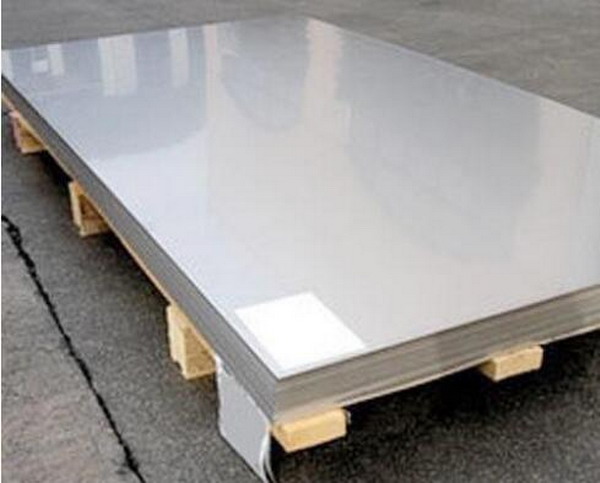
(1) Properties of titanium
Titanium is very similar to steel in appearance, with a density of 4.51 g/cm 3, less than 60% of steel, and is the least dense metal element among refractory metals.
Titanium is very stable in air at room temperature. When heated to 400 ~ 550℃, a strong oxide film is formed on the surface to prevent further oxidation protection. Titanium has a strong ability to absorb oxygen, nitrogen and hydrogen. This kind of gas is a very harmful impurity to titanium. Even if the content is very small (0.01% ~ 0.005%), it can seriously affect its mechanical properties.
The mechanical properties of titanium, also known as mechanical properties, are closely related to purity. High purity titanium has excellent machinability, good elongation and section shrinkage, but low strength, it is not suitable for structural materials. Industrial pure titanium contains some impurities, has high strength and plasticity, and is suitable for making structural materials.
Among the titanium compounds, titanium dioxide (TiO2) has the most practical value. Ti02 is inert and non-toxic to human body. It has a series of excellent optical properties. Ti02 is opaque, high gloss and whiteness, refractive index and scattering power, strong hiding power, good dispersion, the pigment made of white powder, commonly known as titanium white, widely used.
(2) Application of titanium
1. Applications of titanium and its alloys
The dense metal titanium is highly valued by the aviation industry because of its light weight, higher strength than aluminum alloy, and its ability to maintain higher strength than aluminum at high temperature. Considering that the density of titanium is 57% of steel, its specific strength (strength/weight ratio or strength/density ratio are called specific strength) is high, corrosion resistance, oxidation resistance and fatigue resistance are strong, 3/4 of titanium alloy is used as structural materials represented by aviation structural alloy, 1/4 is mainly used as corrosion resistant alloy.
Titanium alloy has low strength and high plasticity, medium strength and high strength, 200(low strength) ~ 1300(high strength) mpa, but in general can be regarded as a high strength alloy. They are stronger than aluminum alloys, which are considered medium strength, and can completely replace some types of steel in strength. In contrast to the rapid decline in strength of aluminum alloys at temperatures above 150℃, some titanium alloys still maintain good strength at 600℃.
In addition to strength, titanium alloys can also be divided into heat resistance, corrosion resistance, low temperature and special functions (such as TiNi shape memory alloy, TiFe hydrogen storage alloy) according to use, according to phase composition can be divided into α, α+β and β and near α, metastable and several types. Up to now, more than 100 kinds of alloy grades have been put into production, and only about 10 kinds have been widely used in industry. Among them, ti-6Al-4V used as structural alloy accounts for 60% of the total sales market of titanium alloy, occupying the dominant position, followed by Ti-5Al-2.5Sn, whose long-term working temperature can reach 500℃(strength is 780 ~ 980 mpa).
However, titanium has two main factors that prevent this abundant element from becoming a common metal. The first is cost. Us market prices are us $8 to US $12 per pound for titanium billet, US $1.00 to US $1.30 per pound for aluminum and US $0.20 to US $0.40 per pound for carbon steel. But the main factor is that titanium itself is highly reactive and difficult to deal with. The atmosphere in the furnace must be strictly controlled and welding must be carried out in an inert atmosphere. The high activity of metal titanium, low thermal conductivity, deformation resistance, poor plasticity at room temperature, deformation process is not only easy to bond with the mold, especially in the machining tool and abrasive adhesion to the hot processing surface, so that the manufacturing of standard structural parts produce a large number of waste titanium chips, namely the so-called residual titanium. Generally forged titanium ingot processing can produce 70% residual titanium, sometimes this number can be as high as 90%.
In order to reduce the burden caused by high cost, on the one hand, the residual titanium processing technology was developed, on the other hand, the near net forming, superplastic forming, precision casting, powder metallurgy, hot isostatic pressing and diffusion connection were developed. For example, powder metallurgy products processed by pulverizing, forming, sintering or hot isostatic pressing consolidation methods are nearly net forming parts, and the material utilization rate is as high as 80%, which not only reduces the material consumption, but also significantly reduces the amount of cutting processing. For example, the application of large thin-wall precision casting technology in titanium alloy makes the performance of titanium castings close to that of titanium forgings, and the cost is reduced by about 50%.
The main consumption of titanium and titanium alloys is the aviation industry. In the 1980s, the United States aviation industry titanium accounted for 74.8% of the total amount of titanium materials, Russia, the United Kingdom and other mainly used in the aviation industry, 90 percent of Japan's titanium for civil industry. In recent years, the application of titanium in non-aerospace industry is increasing, and aerospace is still the "dominant" position. Titanium has been used in many aircraft structures since 1952, when titanium was used as engine nacches and fire shields on the Douglas DC-7. Titanium is critical in Boeing 757, supersonic SR-71 Blackbird, F-22 jet fighter, space satellites and missiles. For example, the fan disc and engine blade in the aircraft are made of titanium castings and forgings.
A second application of titanium relates to the use of its corrosion resistance. Among them, the maximum dosage is for the production of chlor-alkali electrode material. The service life of titanium anode is 10 times that of graphite anode, which can increase the production capacity nearly one times and save electricity by 15%. Annual output of 10,000 tons of caustic soda, about 5 tons of titanium.
Titanium has had its day in the shipping industry. The Soviet Union used 560 tons of titanium each in its six to seven 3,000-ton submarines (its Alpha-class submarines used more than 908 tons). In recent years, titanium has shown great power in offshore oil and gas exploration and development. Between 1997 and 1999 alone, Europe spent $15 billion on north Sea oil and gas development, constructing 21 suspended production vessels and 64 platforms. A new platform requires 50 to 500 tons of titanium for life safety systems, 50 to 100 tons of titanium for wedge stress joints, 400 to 1,200 tons of titanium for telescopic lifters, and 1,400 to 4,200 tons of titanium for fixed lifters.
It is known in the energy industry that titanium is used as condenser and heat exchanger of power generation device. For example, the generator sets of Taizhou Power Plant, Shanghai Jinshan Thermal Power Plant and Zhenhai power plant all choose titanium tube condenser, and the amount of titanium is about 700 tons. Qinshan and Daya Bay nuclear power plants are all titanium condenser. In recent years, titanium has also demonstrated its corrosion resistance in geothermal exploitation of geothermal Wells. It is used to power steam turbines in the high temperature and corrosive environment of geothermal brine, and other materials have to be replaced by titanium because of their short life. The advantage of using titanium is that it can increase the productivity of heat recovery and the life of geothermal Wells. In the 1990s, the United States began to drill a geothermal well in Salton Sea area of Southern California with a temperature as high as 300℃. Till now, 227 tons of ti-6Al-4V-0.1Ru alloy hot-rolled seamless tubes have been used. It is estimated that the amount of titanium used in geothermal exploitation around the world could reach 2,400 tons in the next decade. The yangbajing power station in Xizang will be greatly changed if titanium is used.
Ti-6al-4veli, Ti-3Al-2.5V, Ti-6Al-4V-0.1Ru, Ti-3Al-2.5V-0.1Ru and Molybdenum bearing Ti-38644(Ti-3Al-8V-6Cr-4Zr-4Mo) alloys are mainly used in offshore oil and gas drilling and geothermal development. Marine fasteners are made of ti-5111 (Ti-5Al-1Sn-1Zr-1V-0.8Mo) alloy. In order to meet the needs of ocean engineering, Ti75, Ti31 and Ti631 alloys have also been developed in China.
According to statistics, a 200,000 kw thermal power generating unit uses 90 tons of titanium, and a nuclear power plant uses 80 ~ 100 tons of titanium. Visible energy and corrosion and other aspects of the amount of titanium can not be ignored.
Three promising new applications of titanium are golf balls, biomaterials and automotive manufacturing.
In the sport and leisure sector, the use of golf clubs has grown dramatically, from the absence of titanium in 1993 to 4,000 tons in 1997. This is due to the high strength and light texture of the titanium bat, which increases the hitting distance by 20 to 30 yards or 15 percent on average. The introduction of titanium bats led to 448 new courses in the United States in 1998. The number of players is 25 million (nearly half the world's total). Only 500 bats were sold in 1994, 190,000 in 1995, and 1.72 million in 1997. Titanium has many uses in recreational sports, such as snowboarding, sledges, ice axes, crampons and other climbing facilities.
Titanium has excellent biocompatibility, low coefficient of expansion, high durability and non-magnetism, making it an excellent bone support material. As an implant, the hip joint weighs about half as much as stainless steel, and the bone is glued directly to the titanium implant as it grows. Titanium alloys are also used in knee joints and denture reconstruction. According to statistics, the world's annual amount of titanium used in medical implants is between 600-1000 tons. In addition to ti-6Al --4VELI(ultra-low clearance oxygen), Also developed aluminum free (free of kidney and lung toxicity)Timetal 21SRx(Ti-2.75NB-15.2Mo-0.34Fe-0.18Si-0.250) with Timetal 21S(Ti-2.9NB-14-9Mo-0.09Fe-2.9Al-0.22Si-0.140), Ti-6Al-7Nb, etc.
With the development of low-cost titanium production and titanium powder processing technology, it is possible to extend the application of titanium to automobile industry. Titanium springs are already being used in Formula One racing cars, racing motorcycles and the most expensive Ferrari cars. It is expected that it will soon be used in engine valves, connecting rods, suspension springs, exhaust systems and fasteners of light duty vehicles. It is expected that titanium will enter the automobile market in a large scale, starting with Japan and the United States. The United States produces 16 million cars and light trucks a year. Honda of Japan introduced titanium valves for its Altezza family car in the second half of 1998.
2. Application of titanium dioxide
Titanium white is mainly used in coatings, plastics, paper making, synthetic fibers, printing ink, rubber, enamel and other aspects, as other white coatings. The titanium sol composed of ultrafine titanium dioxide and water and organic solvent has become an independent new variety, which is applied to cosmetics, lens surface finishing agent, ink and coating additive, and its application field is still expanding. The United States is the world's largest producer and consumer of titanium dioxide, with output of 1.36 million tons in 1998, apparent consumption of 1.13 million tons, and output value of up to us $3 billion. Our production and use are much smaller. The consumption of titanium white in the United States, 50% for pigment, paint, varnish, 23% for paper, 23% for plastic, 9% for other uses.
3. Other applications
Titanium iron (TiFe) made of ilmenite concentrate is used in the manufacture of stainless steel deoxidizer and stabilizer, titanium iron hydrogen storage anode in the production of hydrogen storage cell and rare earth hydrogen storage material in performance, and the cost is relatively low, in hydrogen storage, transportation, catalysis, fuel cell and other aspects will have a fight with rare earth. Ti - Ni shape memory alloy is an indispensable high-tech material for medical and military applications. As for electronic ceramics functional materials barium titanate, strontium titanate, titanium compound catalysts and organic titanium Titanium is an inert metal, its chemical symbol is Ti, atomic number is 22, is a silver metal. Specific gravity 4.51, melting point 1668℃. It is very rich in the earth's crust reserves, it is second only to iron, aluminum, magnesium, fourth place, than commonly used metal copper, nickel, lead, zinc sum more than ten times. The ores used to produce titanium in industry include rutiles, ilmenite and titanomagnetite. Due to the difficulty of separation and extraction, the metal titanium of industrial significance was not produced until the 1940s. Therefore titanium is generally referred to as a rare light metal. Because different products in different fields need different titanium and titanium alloy products, people will be processed into plate, rod, tube, belt, wire and other deep processing shape can be provided to the majority of demand, in order to meet the needs of different fields, titanium plate, titanium rod, titanium tube is the most widely used. The following chemical industry commonly used titanium plate performance is introduced as follows: 1. Titanium plate and titanium alloy plate implementation standard: GB/T3621-2007
3. Mechanical properties of titanium plates
4. Surface quality
Titanium plate surface should be smooth, a metal color. The plates are allowed to be delivered on a sandblasted surface.
Titanium plate surface allowed to exist slightly dark and local water marks; Local defects, scratches, indentations, pits and other defects not exceeding half the thickness tolerance are allowed, but the minimum thickness should be guaranteed.
The surface of titanium plate is not allowed to have cracks, peeling, scaling, pressing, metal and non-metal inclusion and other macroscopic defects and traces of alkali washing. Titanium plate is allowed to clear the local defects along the rolling direction, but the thickness of the plate after clearance is not less than the minimum allowable thickness. In addition, titanium plates should not be layered.
Five. Application of titanium plate
The density of titanium and titanium alloy is small, the tensile strength is high, in the range of -253-600 degrees Celsius, his specific strength is almost the highest in metal materials, it can form a thin and hard oxide film in the appropriate oxidation environment, with excellent corrosion resistance. In addition, it also has the characteristics of non-magnetic, small coefficient of linear expansion. This makes titanium and alloy first known as an important aerospace structural materials, and then promoted to ship manufacturing, chemical industry and other fields, and has been a rapid development. Especially in the chemical industry, titanium and titanium alloy products are used in more and more products, such as petrochemical, fiber, pulp, fertilizer, electrochemistry and seawater desalination industries, as exchangers, reaction towers, synthesizers, autoclaves and so on. Among them, titanium plate is used as an electrolytic plate and electrolytic cell in electrolysis and wastewater desalination, and is used as a tower and kettle body in the reactor and reactor body
With the development of science and technology, the application field of titanium is becoming more and more wide, such as medical, automotive, sports, etc., out by the reaction of these themes titanium as a kind of light metals, it has the good characteristics of more and more cognitive and can be set by people, and with the fastest speed into our production applications instead of other metals, even in our body. Heat resistant paint and titanium epoxy paint and other uses are too numerous to enumerate.